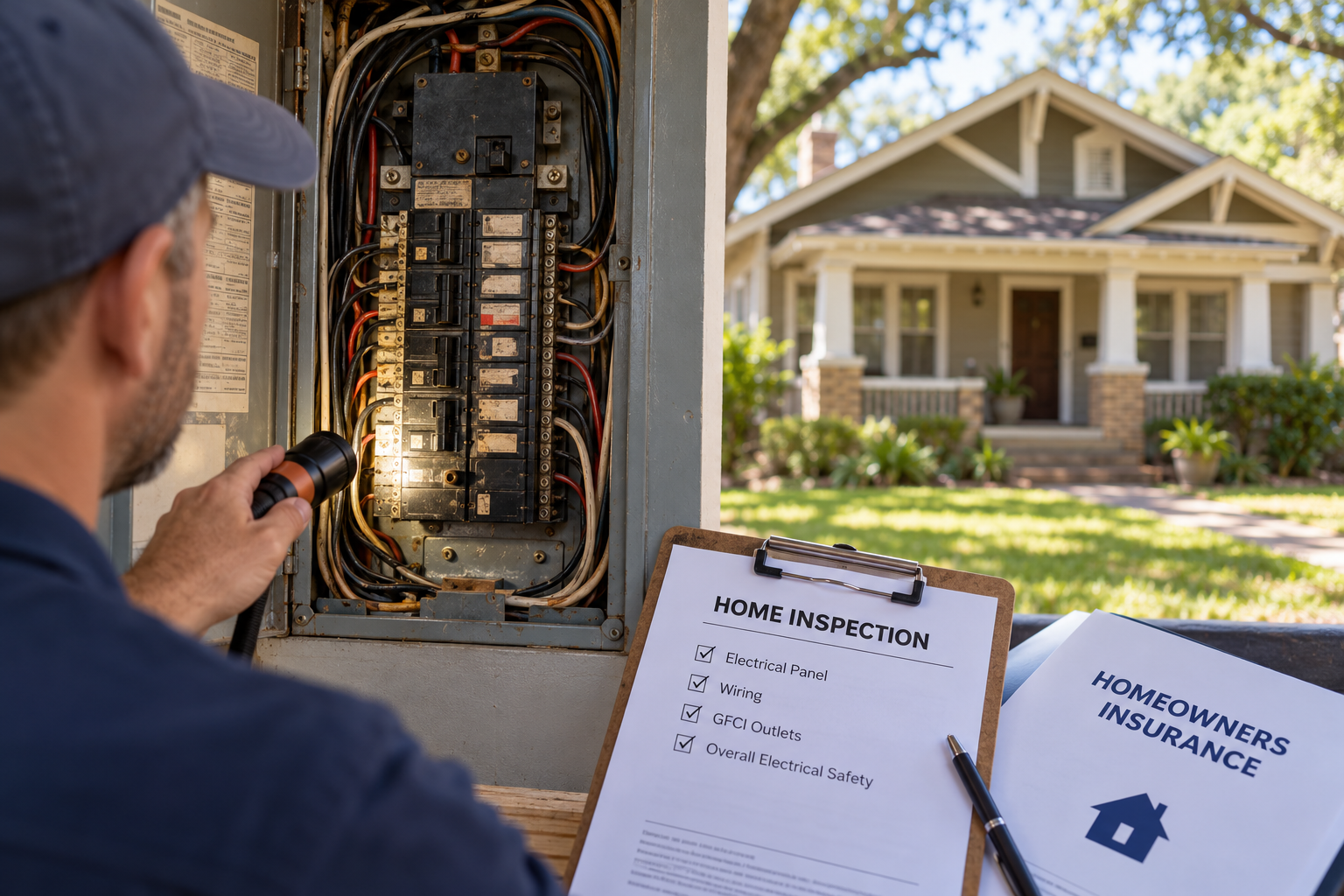
Can you buy an older Dallas house with an outdated electrical panel or old wiring?
Yes, but treat electrical as an insurance question as much as a safety question. Some insurers decline or cancel coverage on certain older panels (Zinsco and Federal Pacific are the usual suspects) and on aluminum or knob-and-tube wiring. Get an electrician's evaluation and an insurance quote during your option period, then decide whether to ask for repairs, ask for a credit, or walk away. In Dallas, a panel replacement averages roughly $1,200, while wiring problems can cost far more.
You found the house. It's a 1940s bungalow in East Dallas with a remodeled kitchen, refinished floors, and a price that makes sense. The inspection report comes back with a note about the electrical panel, and now you're wondering whether that's a footnote or a deal-breaker.
It's neither, and the answer depends on what's behind the panel cover. After 25 years of working in Dallas's older neighborhoods, I can tell you this is one of the most common surprises buyers hit between day three and day seven of the option period. Here's how to sort it out before your option period ends.
Why a clean-looking inspection report isn't the end of the story
Texas home inspectors follow the TREC Standards of Practice, and those standards have limits. An inspector must report certain panel problems, like double-tapped neutrals or a garage outlet without GFCI protection. But as of TREC's published standards, the mere presence of a Federal Pacific panel isn't something the inspector is required to call out as a deficiency. Some inspectors flag it anyway, and good ones do. Others don't.
That gap matters because your insurance company may care about it more than the inspector does. Once you buy, many carriers send someone to look at the house within the first 30 to 60 days. If they find a panel or wiring type they won't cover, you can get a notice of cancellation or non-renewal and a short window to fix it. Imagine finding that out after you've closed and moved in.
Insurers don't treat all electrical issues the same way, so here's a quick guide to what tends to get attention:
- Zinsco and Sylvania panels: Popular in the 1970s, and many carriers won't write new coverage on a house that has one.
- Federal Pacific (FPE) panels: Breakers can fail to trip under overload. Inspectors often flag them, and a carrier that spots one may issue a cancellation notice.
- Pushmatic panels: Obsolete, with hard-to-find parts. Some carriers view them as a problem even though they're not always declined.
- Aluminum branch wiring: Used in many homes from roughly the mid-1960s through the 1970s. Some insurers refuse it, and others charge more.
- Knob-and-tube wiring: Used from the 1880s through the 1930s. It's rare, but you can still find it in the oldest East Dallas and North Oak Cliff houses, usually in attics or behind walls that never got updated.
You can read more about how coverage works in our guide to homeowner's insurance in Dallas.
What to expect by neighborhood and property type
In East Dallas and North Oak Cliff, many houses were built between the 1910s and 1950s. Plenty have been updated, but "updated" can mean a new kitchen with an old panel still sitting in the garage, or a new panel feeding old wiring in the walls. A remodel doesn't prove the electrical system was modernized. Ask what was replaced, when, and whether a permit was pulled.
In Uptown and Oak Lawn, most of what you're buying is a condo or townhome. Inside a condo unit, you may have your own panel, and the HOA may be responsible for the building's main service, risers, and common elements. Check your declaration and the resale certificate so you know which is which. Newer buildings rarely have the panel brands above, but a few older mid-rise buildings from the 1970s do, and an HO-6 insurer will ask.
Either way, one more spot to check is the Texas Seller's Disclosure Notice. It asks whether the seller knows of defects in the electrical system and has a specific line for aluminum wiring. It doesn't name the panel, so ask the seller directly and put the question in writing through your agent. The same goes for any permit history. If you're weighing an older house with signs of past DIY work, our post on what a Dallas home inspection should cover is a good companion read.
Your option period plan for electrical
You have a limited number of days, and electricians and insurers both take time to respond. Here's the order I walk my clients through:
- Day one or two: Read the seller's disclosure and ask the seller for the panel brand and age, any permits, and any known issues.
- During the inspection: Walk the inspector to the panel. Ask them to photograph the label, the breakers, and the inside of the cover. Ask about the wiring type in the attic and any open junction boxes.
- By day three or four: If anything looks old or questionable, book a licensed electrician for a written evaluation. A single visit often costs less than the repair you're trying to price.
- Same week: Request insurance quotes and tell the agent exactly what the panel and wiring are. A quote based on a vague answer isn't worth much.
- Before the option period ends: Decide, and put your request in writing before the deadline.
Don't wait until closing week. By then you've spent money on the appraisal and the survey, and your leverage is gone. Those first few days of the option period are the most valuable ones you have.
What it costs, and what you can ask the seller to do
Based on published Dallas figures, replacing a panel typically runs about $423 to $1,997, with an average near $1,184. Permit fees start around $180 and the city electrical inspection runs around $160. Replacing faulty wiring is a different story, with a published range of $600 to $4,500 for repairs, and whole-house work on aluminum or knob-and-tube wiring can run well beyond that. Get a written bid for your specific house, because these ranges are averages and your number will depend on access, panel location, and what the electrician finds.
Once you have a bid, you have three realistic paths:
- Ask the seller to repair it before closing, using a licensed electrician and a permit. Request the paperwork.
- Ask for a credit or price reduction and handle the work after closing. This works when you want control over the contractor, but check with your lender first about whether any repair is required for loan approval.
- Walk away during the option period. In Texas, you can terminate for any reason within the option period, and you'll lose the option fee but keep your earnest money.
With Dallas County sitting at roughly 4.9 months of supply and about 65 days on market in the first half of 2026 per Redfin data, many sellers are open to reasonable repair requests backed by a bid. Sellers who've had a house sitting for two months tend to listen to a bid from a licensed electrician. Conditions change, and every house is different, so treat this as current conditions, not a promise.
If you're comparing two older houses and one of them has a known panel issue, that issue can become your negotiating point, but only if you find it in time.
Frequently Asked Questions
Will a Texas home inspector always report a Federal Pacific or Zinsco panel?
Not always. The TREC Standards of Practice require inspectors to report specific defects, but the presence of an FPE panel isn't listed as a required deficiency. Ask your inspector in advance whether they flag these panels, and bring in a licensed electrician if one shows up.
Can I get homeowners insurance on a Dallas house with aluminum wiring or knob-and-tube wiring?
Sometimes. Some carriers decline these homes, some charge more, and some require an electrician's report or upgrade. Request quotes during your option period so you know your options before the deadline.
How much does it cost to replace an electrical panel in Dallas?
Published Dallas figures put panel replacement at roughly $423 to $1,997, with an average around $1,184, plus a permit and city inspection. Moving the panel or fixing wiring problems costs more, so get a written bid.
Who pays to fix an electrical problem found during the option period?
It's negotiable. You can ask the seller to repair it, ask for a credit, or terminate during the option period. What the seller agrees to depends on the market, the cost, and how well your request is documented.
Does this apply to Uptown and Oak Lawn condos?
It can. Inside the unit you may have your own panel, while the HOA handles the building's main service. Check the declaration and resale certificate, and ask the HO-6 insurer what they require.
Get the electrical numbers before you make an offer
An older Dallas house can be a great buy, and electrical issues don't have to kill a deal. They just need to be priced, insured, and negotiated while you still have time. If you're looking at an older home in East Dallas, North Oak Cliff, Uptown, or Oak Lawn and want a second set of eyes on the inspection report, I'd be happy to walk through it with you. No pressure, no obligation, just real numbers from someone who knows these neighborhoods. Reach out at mattwatson.com or schedule a quick call and we'll go through it together.
About Matt Watson, Broker, REALTOR®
Matt Watson is a Dallas-based real estate broker and REALTOR® with over 25 years of experience in the city's urban core neighborhoods. He specializes in condos, townhomes, and single-family homes in Uptown, Oak Lawn, East Dallas, and North Oak Cliff. Whether you're buying your first condo or selling a longtime home, Matt brings deep local knowledge and straightforward guidance to every transaction. Connect with Matt at mattwatson.com.