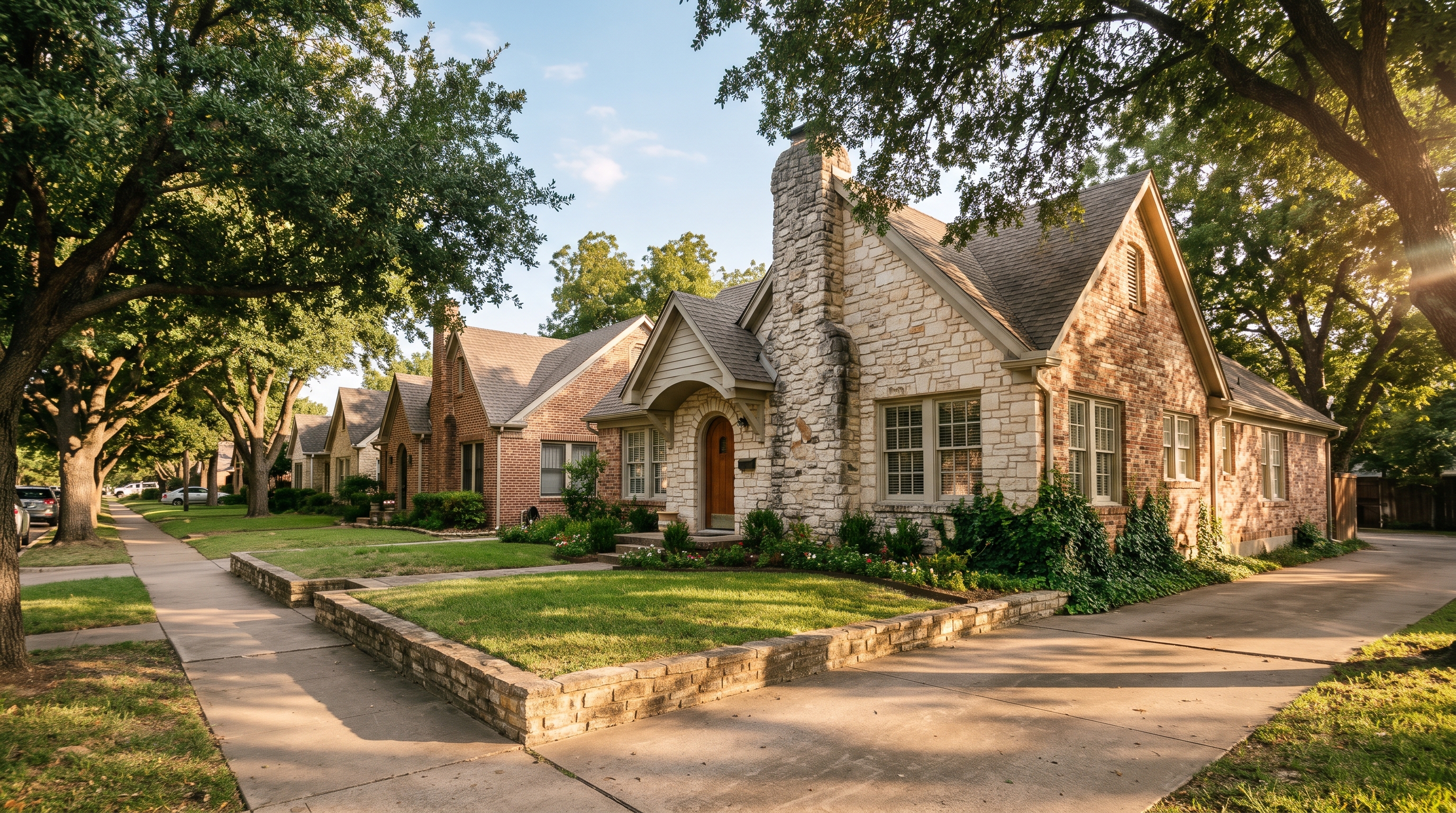
Some Dallas neighborhoods make their impression with busy shopping streets or a dramatic skyline. Stevens Park Village offers something a little different: stone cottages, inviting front porches, and residential streets with a character shaped over generations. Tucked into North Oak Cliff near Hampton Road and Fort Worth Avenue, it combines an established neighborhood setting with convenient access to downtown Dallas.
For buyers who appreciate older homes, the appeal goes beyond architectural style. It is the combination of individual houses, a cohesive streetscape, and a location that keeps the rest of the city within reach.
A Neighborhood With a Story
Stevens Park Village traces its beginnings to 1939, when Annie Stevens opened the original subdivision for development. Many of its earliest homes were built between 1939 and 1945, giving the neighborhood a distinct architectural foundation from the years surrounding World War II.
The original development balanced consistency with individuality. A contemporary newspaper account cited in the neighborhood’s preservation research described eight available floor plans under the direction of architects Gill & Bennett, along with lots reserved for buyers who wanted to use their own architect. That approach helped create a neighborhood whose homes feel related without looking identical.
Later development added another layer. An addition to the west introduced larger ranch-style homes in the 1950s, broadening the neighborhood’s housing choices while retaining its established residential feel.
Architecture That Rewards a Closer Look
Austin stone and brick cottages are among Stevens Park Village’s most recognizable features. The original subdivision is predominantly Minimal Traditional, a style that generally favors modest proportions, straightforward rooflines, and restrained ornament, with examples of ranch and midcentury design adding variety.
The details make these homes memorable. Depending on the property, you may find hardwood floors, fireplaces, archways, corner cupboards, or distinctive windows. Heritage Oak Cliff also identifies 15 neighborhood homes as designs by Charles Dilbeck, the noted Dallas architect whose work emphasized welcoming, character-rich houses.
For home shoppers, that means there is no single Stevens Park Village interior. Part of the experience is discovering how each property’s original design has been preserved, adapted, or reimagined.
A Residential Setting Close to the City
Stevens Park Village offers a useful balance for people who want a house in an established neighborhood without moving far from central Dallas. Its location provides access to downtown and Interstate 30, while nearby Stevens Park Golf Course adds another recognizable Oak Cliff destination to the surroundings.
That combination gives the neighborhood a story beyond the homes themselves. It is a place to consider when the goal is not simply more square footage, but a distinctive home base with connections to the broader city.
A Sense of Place Worth Preserving
Much of the neighborhood’s character comes from how its homes relate to one another. Within the original subdivision, consistent front setbacks, similar building materials, and a concentration of houses from the same era help create a cohesive streetscape. Individual homes have their own personalities, but they contribute to a larger setting.
Community connections are part of that identity, too. The Stevens Park Village Neighborhood Association was established in 1991, providing an organized way for residents to stay informed and involved.
For buyers considering changes to an older home, the neighborhood’s architectural history is worth understanding alongside the property itself. The original design, later additions, and surrounding streetscape all help explain what makes a particular house belong here.
Finding Your Place in Stevens Park Village
Stevens Park Village deserves a closer look if your home search centers on architectural character, an established residential setting, and proximity to downtown Dallas. Its collection of cottages and later ranch-style homes offers a different experience from neighborhoods defined primarily by new construction.
The best introduction is to look closely: at the stonework, the windows, the proportions, and the way one home complements the next. Those details tell the story of Stevens Park Village—and help explain why this small corner of North Oak Cliff has an identity all its own.