


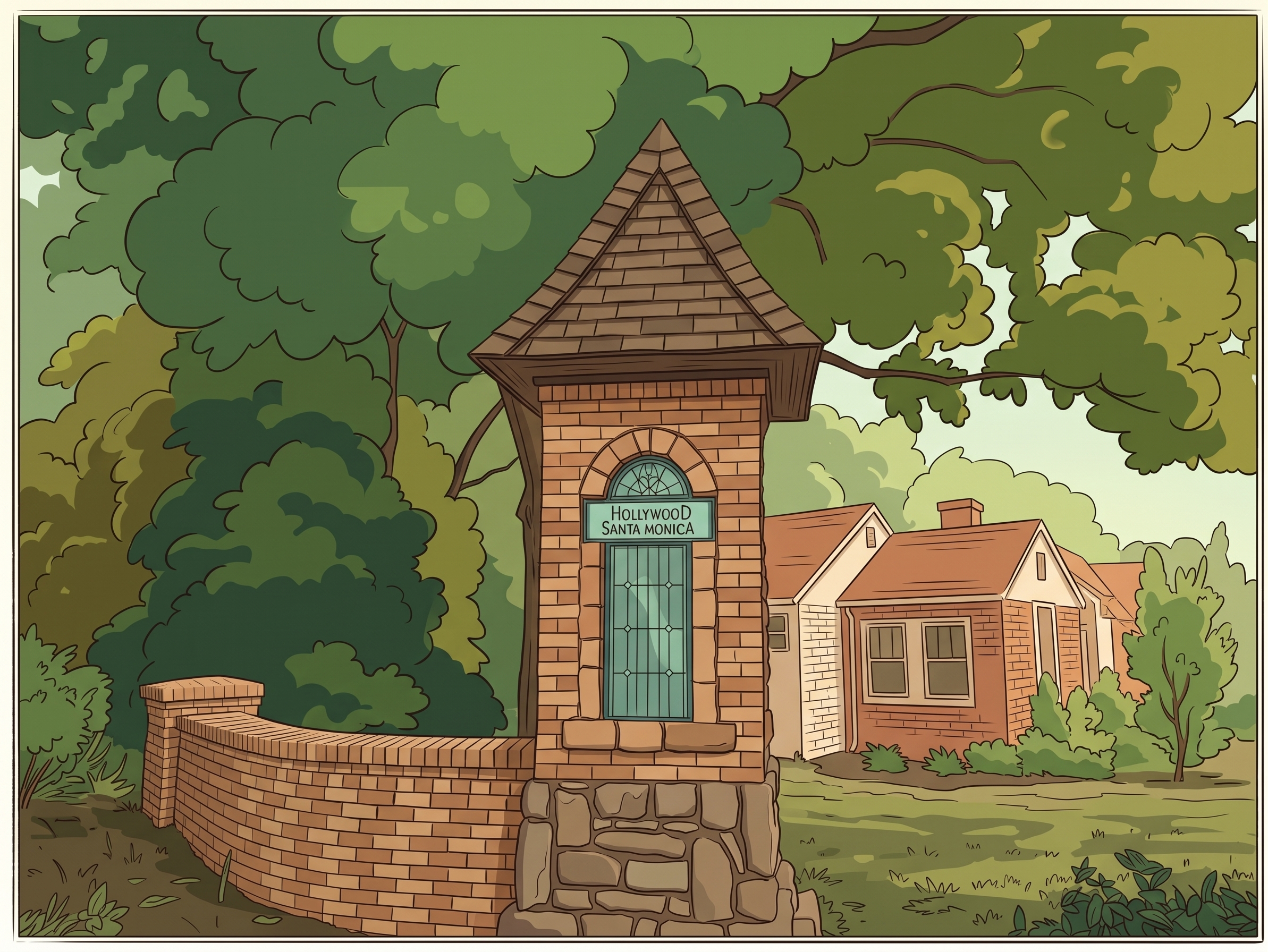
 Hollywood Heights/Santa Monica is one of those Dallas neighborhoods that feels immediately distinctive. Tucked into East Dallas near White Rock Lake, this established residential area is known for rolling terrain, mature trees, winding streets, and an unusually cohesive collection of historic homes.
For buyers who want more personality than a typical newer-build neighborhood can offer, Hollywood Heights/Santa Monica delivers a real sense of place. The neighborhood is especially known for its Tudor cottages, but its appeal goes beyond any one architectural style. Here, the streetscape matters, the homes have individual character, and the neighborhood’s history is still visible in the details.
A neighborhood with lasting character
Much of Hollywood Heights/Santa Monica was developed in the 1920s and 1930s, when East Dallas was growing outward from the city’s core. Developer J. B. Salmon—also associated with Kessler Park—acquired the area after it had been used as a dairy farm and developed the Hollywood Addition. Santa Monica and Collier additions later expanded the neighborhood.
The result is a neighborhood with an unmistakable early-Dallas residential character. It was originally envisioned as a middle-class complement to nearby Lakewood, and many homes remain modest in footprint relative to newer construction while offering architectural details that are increasingly difficult to reproduce.
Hollywood Heights/Santa Monica sits on the western bluff of the White Rock Escarpment. Its hills, mature trees, and established streets give it a different feel from flatter parts of Dallas—and make the neighborhood as appealing from the sidewalk as it is from inside the homes.
The architecture buyers notice
The signature style here is the Tudor cottage. Brick or stone exteriors, steeply pitched roofs, decorative chimneys, arched entries, leaded or stained glass, and distinctive masonry details give many homes the warm, storybook look associated with the neighborhood.
But Hollywood Heights/Santa Monica is not a neighborhood of identical homes. Buyers may also encounter:
-
Spanish and French Eclectic influences
-
Craftsman-inspired cottages
-
Colonial Revival and Neo-Classical details
-
Minimal Traditional homes
-
Pueblo Revival and Monterey-influenced designs
That variety keeps the area visually interesting, while the shared period, scale, and attention to detail create a cohesive streetscape.
For buyers, the search is often less about finding a standardized floor plan and more about deciding which version of historic Dallas living feels right: an original cottage with preserved details, a thoughtfully updated home, or a property with the potential for a careful restoration or addition.
A neighborhood built for ownership
Hollywood Heights/Santa Monica is primarily a neighborhood of single-family homes. That makes it a natural fit for buyers who want to own in an established Dallas community rather than live in a district dominated by large apartment projects.
The housing stock includes smaller cottages, larger historic homes, and residences that have been expanded or renovated over time. Many original homes were built with a more intimate scale, thoughtful craftsmanship, and architectural details that remain central to the neighborhood’s appeal.
That range gives buyers an important choice: preserve and enjoy an original home, purchase one that has already been updated for modern living, or take on a renovation with a clear understanding of the home’s condition and the neighborhood’s standards.
Conservation district considerations
One of the most important things to understand before buying in Hollywood Heights/Santa Monica is its City of Dallas conservation district. The neighborhood association describes the overlay as a way to protect the architectural integrity of vintage homes while allowing appropriate restoration, renovation, and additions that respect the neighborhood’s character.
That preservation focus is a significant part of the neighborhood’s value. It helps maintain the architectural consistency and established streetscape that draw buyers to the area in the first place. Dallas Magazine notes that the conservation district protects the original charm of the neighborhood’s historic homes, while still allowing homeowners to make changes within the district’s guidelines.
For buyers, the practical takeaway is simple: before planning an exterior project, confirm what standards and approvals may apply. Additions, window replacements, garages, driveways, retaining walls, roofing choices, and other visible improvements may require a closer review than they would in a neighborhood without conservation rules.
These requirements are not necessarily a limitation; for many homeowners, they are part of the reason the neighborhood has retained its appeal over time.
Location and lifestyle
Hollywood Heights/Santa Monica offers a residential environment without feeling isolated from the rest of East Dallas. The neighborhood is near White Rock Lake, Lakewood, Casa Linda, Samuel Grand Park, Tenison Memorial Golf Course, Lakewood Country Club, and the Santa Fe Trail.
The Santa Fe Trail connects the area to a broader network for walking, running, and cycling, while nearby White Rock Lake and the Dallas Arboretum make it easy to enjoy outdoor space without leaving the city.
Residents also have access to Lakewood shopping and dining, Casa Linda Plaza, and the wider East Dallas area. The neighborhood’s advantage is that it offers convenient access to those amenities while maintaining a quieter, more residential day-to-day setting.
What buyers should evaluate
Buying a historic home is different from buying new construction, and that difference is part of the opportunity in Hollywood Heights/Santa Monica. A well-maintained older home can offer craftsmanship, materials, and character that are difficult to duplicate. At the same time, buyers should plan for a more thorough review of a home’s condition and history.
A few items deserve special attention:
-
Condition beyond cosmetics: Original windows, masonry, roof condition, plumbing, electrical systems, foundation performance, and drainage can matter more than a renovated kitchen or new paint.
-
Renovation history: Ask what has been updated, when work was completed, whether permits were obtained when needed, and how improvements were integrated with the original architecture.
-
Conservation-district planning: If you envision an addition, exterior modification, detached garage, or significant landscaping work, review applicable standards before making plans.
-
Insurance and replacement cost: Historic homes with original details and custom materials may warrant a detailed conversation about coverage and replacement cost.
-
Financing preparation: Buyers should understand how property taxes, homeowners insurance, and planned improvements fit into their overall homeownership budget.
The right property here is rarely about checking every new-construction box. It is about finding a home whose layout, condition, architectural character, and long-term potential fit the way you want to live.
Discover Hollywood Heights/Santa Monica
Hollywood Heights/Santa Monica is a reminder that Dallas real estate is not only about new towers, new townhomes, or the latest development announcement. Some of the city’s most enduring neighborhoods are defined by preservation, architecture, and a streetscape that has taken generations to create.
For buyers, it is a place to explore when “character” is more than a design preference. The neighborhood offers historic homes, a true ownership-oriented setting, convenient access to White Rock Lake and East Dallas amenities, and a conservation-minded identity that helps protect what makes the area special.
