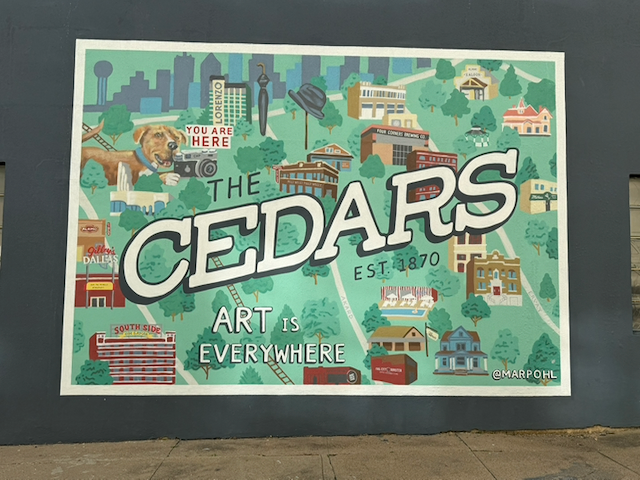
Located just south of Downtown, The Cedars is one of Dallas’ oldest urban neighborhoods and one of its most distinctive. Once a Victorian-era residential enclave, the area has reinvented itself into a creative, industrial-inspired community known today for modern condos, townhomes, skyline views, and large-scale urban redevelopment.
Rather than traditional suburban streets, The Cedars offers a dense, urban environment where new construction and adaptive reuse projects have transformed former industrial land into a vibrant residential district.
Neighborhood Boundaries & Location
The Cedars is generally defined by:
-
I-30 to the north
-
Al Lipscomb Way to the south
-
The Trinity River corridor to the west
-
I-45 to the east
This positioning places residents just minutes from Downtown Dallas, the Convention Center, and major employment hubs, while still offering a neighborhood feel distinct from Uptown or the central business district.
Transit access is anchored by Cedars Station, providing convenient light-rail connections throughout the city.
A Neighborhood With Deep Roots and a Modern Revival
The Cedars dates back to the 1870s, when it began as a residential area of modest homes that quickly evolved into one of Dallas’ premier neighborhoods. Victorian cottages, large estates, and towering cedar trees once lined the streets, attracting prominent Dallas families and much of the city’s early Jewish community.
As rail lines and industry expanded in the early 20th century, the neighborhood transitioned into a heavily commercial and industrial zone. Over time, most of the historic homes were demolished, and residential life largely disappeared.
The late 20th and early 21st centuries marked a turning point. Urban redevelopment efforts began converting old industrial land into residential and creative spaces, laying the foundation for today’s Cedars.
Two major catalysts helped accelerate this transformation:
South Side at Lamar – The Spark of Urban Living
The redevelopment of South Side at Lamar marked one of the first large-scale efforts to bring residents back into The Cedars.
While primarily a lease-oriented apartment and mixed-use project, it demonstrated that people were willing to live in the area and helped shift perceptions of the neighborhood from industrial to residential. With hundreds of units, retail space, and proximity to transit, South Side at Lamar is widely viewed as the beginning of the modern revitalization of The Cedars.
Dallas Police Headquarters – Public Investment and Stability
Another major factor in the neighborhood’s resurgence was the establishment of the Dallas Police Headquarters.
The project was made possible in part through a significant land donation by developer Jack Matthews, bringing a major civic presence to The Cedars. This public investment improved infrastructure, accessibility, and confidence in the area’s long-term growth, encouraging additional residential and commercial development to follow.
The Proposed Texas Bullet Train & Its Impact on The Cedars
For several years, The Cedars was positioned to benefit from one of the most ambitious transportation projects ever proposed in Texas — a high-speed rail line connecting Dallas and Houston.
The project, led by Texas Central Railway, envisioned a Japanese-style bullet train capable of traveling between Dallas and Houston in roughly 90 minutes. Early plans included a Dallas terminal just south of Downtown, with The Cedars frequently discussed as one of the neighborhoods most likely to see major redevelopment tied to the station.
Had it moved forward as originally planned, the bullet train would likely have accelerated residential demand, commercial investment, and large-scale mixed-use development throughout The Cedars, further cementing it as a transit-oriented urban hub.
However, after years of legal challenges, financing obstacles, and political opposition, the Texas Bullet Train project appears to be off — at least for now. While the concept may resurface in the future, no active construction is currently underway.
For The Cedars, the proposal underscored just how strategically located the neighborhood is within Dallas’ urban core. Even without the high-speed rail, the area continues to benefit from strong redevelopment momentum, but the bullet train remains a notable “what could have been” chapter in its growth story.
Lifestyle and Atmosphere
The Cedars offers a distinctly urban feel compared to more traditional residential neighborhoods in Dallas. The atmosphere is creative, energetic, and evolving, with a growing mix of breweries, live music venues, art spaces, and locally owned businesses.
Residents are typically drawn to The Cedars for:
-
Immediate proximity to Downtown Dallas
-
A creative, industrial-inspired environment
-
Expanding nightlife and entertainment options
-
Urban living that can feel more attainable than some higher-priced core neighborhoods
It’s a neighborhood that continues to grow and change, appealing to buyers who enjoy being part of an up-and-coming urban district.
Condos, Townhomes, and Modern Residential Development
Unlike some Dallas urban neighborhoods that feature historic condo conversions, most residential product in The Cedars today is new construction or recently built.
Modern Condominiums
Recent years have introduced mid-rise condo buildings designed for urban living, typically offering:
-
Open floor plans and contemporary finishes
-
Balconies or terraces, many with Downtown skyline views
-
Structured parking and controlled access
These projects cater to buyers who want low-maintenance living close to Downtown while enjoying newer construction standards.
Infill Townhome Communities
Townhomes have become one of the most common ownership options in The Cedars. These developments often include:
-
Two to three stories of living space
-
Rooftop decks or large terraces
-
Modern architectural styling
They appeal to buyers seeking more square footage and privacy than a condo, while still maintaining an urban lifestyle.
Loft-Style Living: Primarily Apartment Communities
While The Cedars is often associated with “industrial loft” living, most true loft-style spaces in the neighborhood today are apartment communities rather than for-sale condos.
Two well-known examples include:
These developments feature high ceilings, open layouts, and industrial-modern design elements that carry forward the neighborhood’s warehouse-inspired aesthetic, while serving primarily as rental housing.
Development and Growth Trends
Several forces continue shaping The Cedars:
-
Transit-oriented growth driven by light-rail access and freeway connectivity
-
Large-scale redevelopment converting former industrial land into residential communities
-
New construction condos and townhomes expanding ownership opportunities
-
Cultural and entertainment growth strengthening lifestyle appeal
Together, these trends have positioned The Cedars as one of Dallas’ most actively evolving urban neighborhoods.
Is The Cedars Right for You?
The Cedars tends to attract buyers who:
-
Want to live close to Downtown Dallas
-
Prefer modern condos or townhomes over traditional houses
-
Enjoy creative, urban environments
-
Appreciate skyline views and new construction
It’s less about quiet residential streets and more about urban energy, growth, and contemporary living — making it a strong fit for professionals, creatives, and anyone looking for a dynamic Dallas neighborhood on the rise.
