


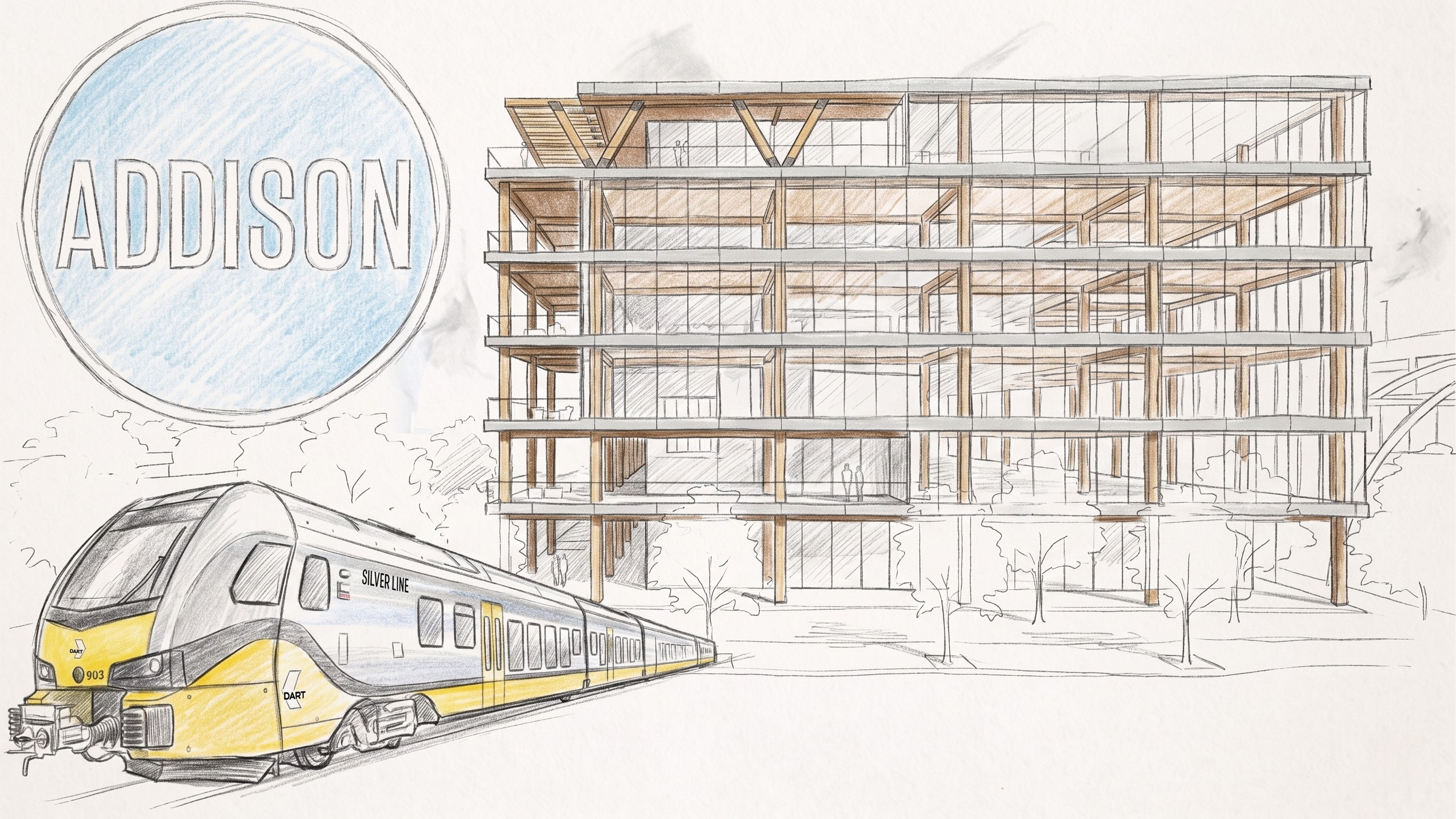
What is Addison Junction and why does it matter for North Dallas real estate? Addison Junction is a planned mixed-use district near Addison Circle Park and the Addison Circle Silver Line station, designed to add office, hotel, restaurant, and entertainment uses to one of North Dallas's most strategically located submarkets.
Addison has always punched a little above its weight in the North Texas market. It is dense, walkable by suburban standards, and packed with restaurants and activity in a way that most nearby suburbs are not. But the next chapter may be its most consequential, because Addison Junction is not just another mixed-use project. It is a bet on what transit-connected, walkable growth looks like in North Dallas, and it is worth paying attention to whether you are buying, selling, or simply keeping an eye on where the market is heading.
I have been watching North Dallas closely for a long time. Developments like this one do not move markets overnight, but they do signal direction. And right now, Addison is pointing somewhere interesting.
What Addison Junction Actually Is
Addison Junction is a planned mixed-use district centered near Addison Circle Park and the Addison Circle Silver Line station. The project calls for office space, a boutique hotel, restaurants, entertainment venues, public plazas, and event space. The town has also committed to infrastructure improvements to support the buildout.
This is not a speculative concept on a rendering board. Addison has approved infrastructure investment to move the project forward, which is a meaningful signal that the town is serious about seeing this through.
The Silver Line is already a major piece of the puzzle. The commuter rail opened in October 2025, connecting Addison to Plano, Richardson, Dallas, Carrollton, Coppell, Grapevine, and DFW International Airport. That regional connectivity is now live, and it changes the conversation about who wants to be near this area and why.
Why This Project Stands Out
A few things set Addison Junction apart from the typical suburban development announcement.
Location. It sits in one of the most well-positioned corridors in all of North Dallas. Addison already has strong highway access, and now with the Silver Line station operational, the area has a genuinely multimodal profile that is still rare in the suburbs.
Public commitment. When a municipality puts money into infrastructure to support private development, it signals real confidence. That kind of public-private alignment does not always materialize, but when it does, it tends to accelerate what happens next.
Identity reinforcement. Addison already has a reputation for density, activity, and amenities. Addison Junction does not try to build something new from scratch. It layers onto a submarket that already has momentum and tries to deepen what makes it attractive.
What It Could Mean for Real Estate
The question worth asking is not whether Addison Junction transforms the market tomorrow. It probably will not. The better question is whether it strengthens long-term demand for nearby housing types that benefit from transit access, walkability, and a live-work-play environment.
Property types most likely to benefit from this kind of development include:
- Townhomes near the station corridor
- Condominiums in and around the Addison Circle area
- Apartment communities within walking distance of the mixed-use core
- Move-up single-family homes in adjacent North Dallas pockets
Buyers increasingly pay premiums for convenience and lifestyle proximity. If Addison Junction delivers on its promise, properties near the district could see stronger attention from both owner-occupants and investors over the next several years.
It is also worth noting that projects like this tend to attract follow-on investment. Once anchor retail, hospitality, and office tenants commit, smaller businesses and residential developers often follow. That compounding effect is what turns a development project into a market shift.
The Broader North Dallas Pattern
Addison Junction does not exist in isolation. It is part of a broader trend across North Dallas: more infill, more mixed-use, and a growing effort to create places that feel like real neighborhoods rather than isolated office or retail corridors.
That trend matters because it tells you where both public and private capital are flowing. Submarkets that keep attracting investment, amenities, and transit access tend to stay relevant longer. The ones that do not often get passed over when buyers are comparing options.
For buyers considering the northern suburbs, the question worth asking is not just what a neighborhood looks like today, but what it is being built to become.
What to Watch Going Forward
A few specific things worth monitoring as this project develops:
- Buildout timeline. Is the project moving on schedule, and are major tenants committing?
- Silver Line ridership. The commuter rail opened in October 2025. How quickly ridership builds at the Addison Circle station will be one of the clearest early signals of how much the transit connection is actually changing behavior.
- Housing supply near the station. If residential development follows the commercial investment, it will further shift demand dynamics.
- Market response to new retail and hospitality. Early tenants will signal whether the district is hitting the lifestyle mark that buyers care about.
None of these are certainties. Development projects face delays, financing gaps, and market headwinds. But if Addison Junction tracks the way planners intend, it could help solidify Addison as one of the more important growth nodes in the region.
Frequently Asked Questions
Is Addison a good place to buy real estate right now? Addison has historically been a strong submarket due to its density, restaurant scene, and access. With Addison Junction in development and the Silver Line now operational at Addison Circle, there is a reasonable case that long-term demand for nearby housing will strengthen, particularly for walkable property types like condos and townhomes.
How will the Silver Line affect property values near Addison Circle? Transit-adjacent properties often see a value premium over time, particularly when the transit connection links to a broader regional network. The Silver Line's impact will depend on ridership and how quickly surrounding development fills in, but the long-term direction is generally favorable for properties near the station.
What types of properties benefit most from transit-oriented development? Condominiums, townhomes, and apartments tend to see the strongest benefit from transit-oriented growth because their buyers and renters are most likely to value walkability and reduced car dependency. Single-family homes in close proximity can also benefit, particularly in markets where lifestyle and convenience carry weight in the buying decision.
If you are thinking about buying, selling, or investing in the North Dallas area and want to talk through how projects like Addison Junction fit into your real estate strategy, I am happy to have that conversation.
Call or text me at (214) 417-9171.
Matt Watson, Broker, REALTOR® Matt@MattWatson.com
:format(webp):quality(80)/u.realgeeks.media/mattwatson/agent_pic_sidebar.jpg "Agent Matt Watson")